The Reliability of the Gospels
This is a test article let's see how it goes
Open with a normal paragraph. Inline emphasis is single underscores for italic
and double asterisks for bold. (Double underscores also render bold, not
italic — so use single _ when you mean italic.)
A heading
A section divider is three asterisks (or three dashes) ALONE on their own line, with a blank line above and below. Never wrap it in emphasis like --- or ---.
Scripture — the :::verse directive
Rules for every directive block: a blank line BEFORE it, a blank line AFTER it,
and the closing ::: on its OWN line. It can never open and close on one line.
Preferred form — paste the verse text inside the block (always works, nothing to cache):
Ref-only form — leave the body EMPTY and the ESV text is auto-filled at build time. The Publish button caches new refs automatically (step 1 of its pipeline). If a ref somehow isn’t cached, the block renders blank — and Publish’s lint will block and tell you before anything ships.
Images — the :::figure directive
Figure files live in public/images/ and the src is an absolute “/images/…” path (case-sensitive). Always include alt text.
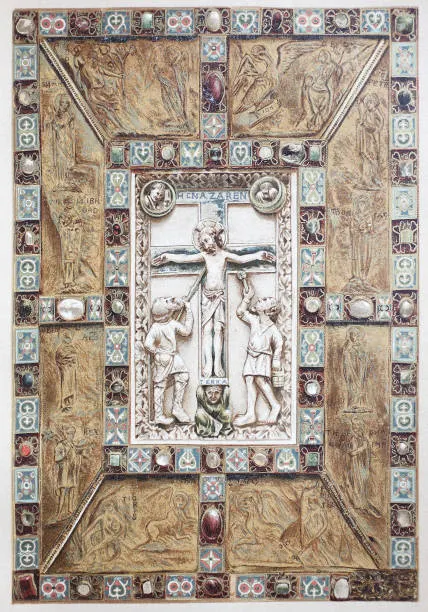
You can add an optional credit attribute: {src=“/images/X.png” alt=”…” credit=“Artist”}.
Inline count animation
Use the inline :count directive for an animated number, e.g. over 5,000 manuscripts. (Single colon = inline; triple colon = block.)
Block quotations
Use a > at the start of EACH line — do NOT wrap the paragraph in backticks
(backticks render as inline code).
This is a real blockquote. It can span multiple lines, each beginning with a >.
Footnotes
Put a marker in the text like this1 and, optionally, another here2. Define
each one at the bottom with a COLON: [^1]: text. The colon is required — [^1]=
(equals) breaks every footnote on the page. If a footnote needs a SECOND paragraph,
indent the continuation paragraph by 4 spaces or it falls out of the note and
renders as body text. Publish’s lint blocks both mistakes before anything ships.
Thank you for reading, love you all!