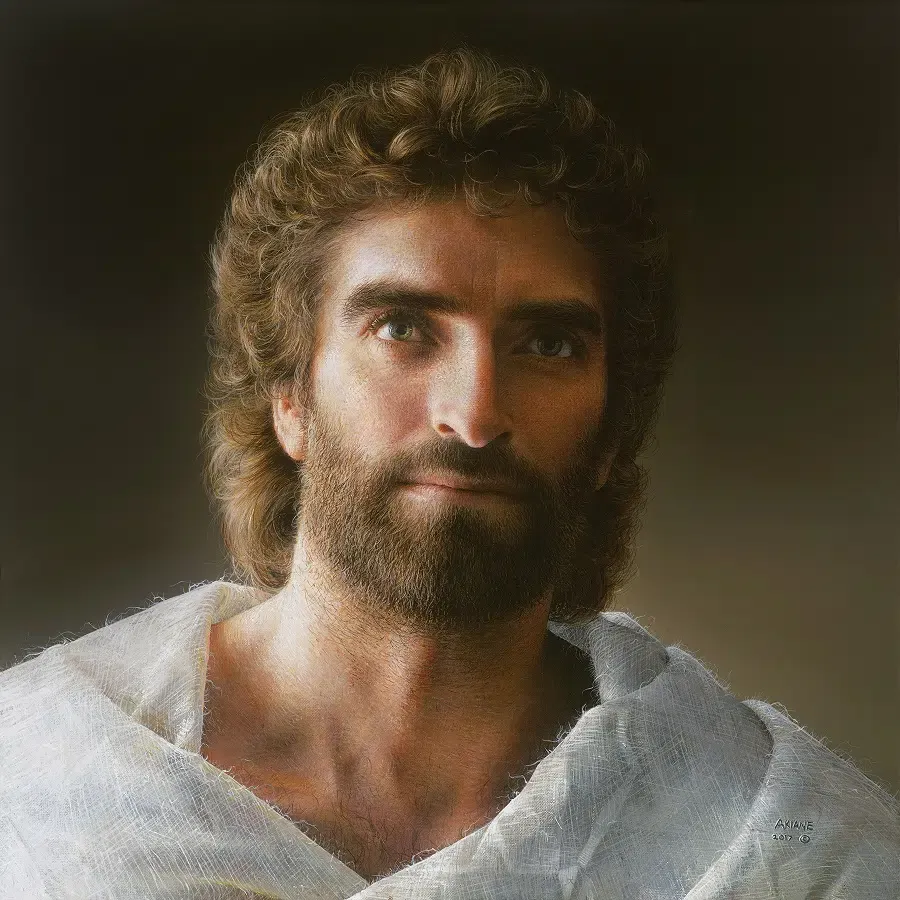
The Revelation of Jesus Christ, Ch.1
Study the book of Revelation with me.
I am beginning a deep study of the book of Revelation. As one of my favorite people, I invite you to come along on this journey with me!
The series will each operate as a quick read with occasional options for deep dives. Each article update will cover one full chapter of Revelation every 4-6 weeks or so.
This is the article format:
- Outline.
- Full chapter in ESV translation (for easy reading).
- Verse-by-verse walk-through of the chapter.
- Footnotes1 <- like this will provide more depth, for those interested.
- Closing with how to apply the content to our lives today.
Revelation, Chapter One
Outline
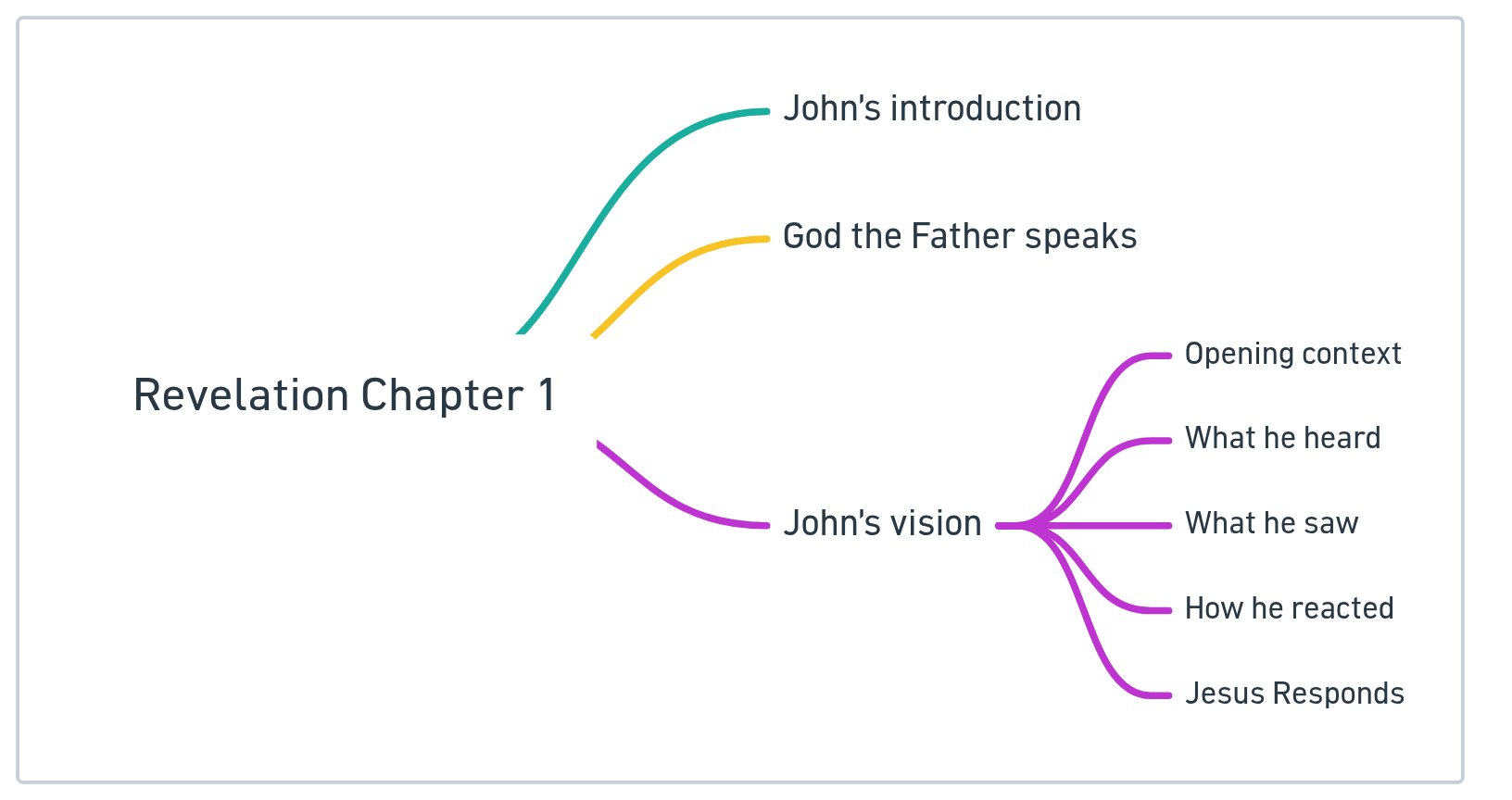
Before any review or analysis, below is the full chapter in the ESV translation:
Revelation, Ch. 1
Verse-by-Verse Walk-Through
John’s Introduction:
“The revelation of Jesus Christ, which God gave him to show to his servants the things that must soon take place. He made it known by sending his angel to his servant John, who bore witness to the word of God and to the testimony of Jesus Christ, even to all that he saw.” vs. 1-2
- The Greek word for “Revelation” here is an interesting one: apokalupsis (the same root for the English word “apocalypse”).2
- Verse 1 states this book is the revelation of Jesus Christ, given to Him by God the Father, for the purpose of showing it to His (Christ’s) servants. What is the revelation? “The things that must soon3 take place”. Please stop for a moment and reread this verse and bullet point again and sit with the monumental truths it contains. There aren’t words in any human language that capture the magnitude of what’s happening in this verse, so I’ll stop there.
- “made known by sending his angel” - this book is largely administered by angels, escorting and explaining visions to John, who faithfully recorded what he saw as commanded by our Lord.
“Blessed is the one who reads aloud the words of this prophecy, and blessed are those who hear, and who keep what is written in it, for the time is near.” v. 3
- This is amazing - God makes a promise to us here. If you are reading this sentence, God is blessing you. God promises to bless those who do three things in regards to this book: read, hear, and keep - what is written in the book.
- Additionally, in the last chapter of Revelation, chapter 22, verse 7 says “And behold, I am coming soon. Blessed is the one who keeps the words of the prophecy of this book.” Meaning God promises a blessing, both at the beginning and end of the book, to those who read and follow what is written in it. If that doesn’t give you reason to dig deep in Revelation and keep coming back for more, I don’t know what else could.
“John to the seven churches that are in Asia: Grace to you and peace from him who is and who was and who is to come, and from the seven spirits who are before his throne, and from Jesus Christ the faithful witness, the firstborn of the dead, and the ruler of kings on earth.” vs. 4-5
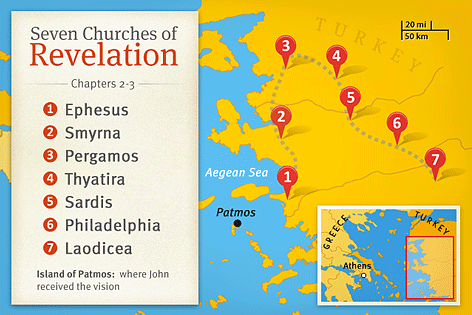
- We will cover the seven churches later on during John’s vision.
- “From him who is and who was and who is to come” - This is God the Father, described with attributes that stretch our human understanding for He who exists outside of time and space. This description is used several places for God elsewhere in Revelation, such as 4:8 and 11:17.
- “Seven spirits who are before his throne” - there are at least two primary views here. Many believe this refers to the Holy Spirit; others perhaps being heavenly beings in service to God4.
- “Faithful witness” - of the truth. Jesus is the Truth5.
- “Firstborn of the dead” - just as the firstborn in a family is the primary inheritor, so is Jesus. Not because He was first sequentially but because He is first in terms of priority and preeminence.
- “Ruler of kings on earth” - Revelation 19:15 says Jesus will “rule [the nations] with a rod of iron”.
“To him who loves us and has freed us from our sins by his blood and made us a kingdom, priests to his God and Father, to him be glory and dominion forever and ever. Amen. Behold, he is coming with the clouds, and every eye will see him, even those who pierced him, and all tribes of the earth will wail on account of him. Even so. Amen.” vs. 6-7
- “Him who loves us” - note the present tense, actively loving us, how amazing!
- In these verses, there are several allusions to Daniel 7:13-14, which says: “behold, with the clouds of heaven there came one like a son of man, and he came to the Ancient of Days and was presented before him. And to him was given dominion and glory and a kingdom, that all peoples, nations, and languages should serve him; his dominion is an everlasting dominion, which shall not pass away, and his kingdom one that shall not be destroyed.”
- “Made us a kingdom, priests to his God and Father” - The role that was intended originally for Israel lives on through the church as we are, in Christ, a kingdom and priests to God6.
- “to him be glory and dominion forever and ever. Amen.” - Again, a direct connection to Daniel 7.
- “he is coming” - note the present tense, as if to say “he’s on his way.”
- “Coming with the clouds” - Remember these sharp words from Jesus when the High Priest questioned Him before His crucifixion: “the high priest said to him… tell us if you are the Christ, the Son of God.” Jesus said to him, “You have said so. But I tell you, from now on you will see the Son of Man seated at the right hand of Power and coming on the clouds of heaven.” -Matt. 26:63-64. Before His accusers, Jesus directly quoted Daniel 7:13, and here in Rev. 1 scripture is coming back full circle just as Jesus said it would. Isn’t God’s Word amazing!?
- “and every eye will see him” - Everyone will see Jesus when He returns in glory and there’s specific mention of two groups who “will wail on account of him”:
- “all tribes of the earth” - this one is self-explanatory, everyone who denies Christ will face judgment.
- “even those who pierced him” - This is so fascinating, who was it that pierced Jesus? You might be thinking of the Roman soldiers who pierced Jesus’ side, but that’s not what John is referencing here. This actually references a prophecy in Zechariah regarding Israel, who will “look on Him whom they have pierced”. Friends, this is referencing a prophecy from Zechariah where Israel will mourn like never before, not in fear and dread, but repentance!7
- “Amen” closes the opening prayer twice, literally meaning “let it be”, putting several “exclamation points” on the end of the introduction.
God the Father Speaks:
“I am the Alpha and the Omega,” says the Lord God, “who is and who was and who is to come, the Almighty.” v. 8
- Here we have an interjection from God the Father Himself into the chapter. It feels somewhat oddly out of place, without transition to it or from it.
- Why do you think God added this statement here and now? While no human knows for sure, it appears to be an affirmation of the book of Revelation and the prophecies contained therein. However, one clue to the purpose of this statement is likely found in Revelation 21:5-6, which is the only other place God the Father speaks directly in the book. God’s statements create a set of bookends for Revelation, if you will8.
- God proclaims He is “Alpha and Omega” (the first and last letters of Greek alphabet). In other words, He is the totality of all knowledge, I am the omniscient One.
- “Who is and was and is to come” - a phrase repeated by John earlier in his introduction, God is saying I exist outside of time and space, I am the omnipresent One.
- “The Almighty” - the summation of all power, I am the omnipotent One.
John’s Vision - Opening Context:
“I, John, your brother and partner in the tribulation and the kingdom and the patient endurance that are in Jesus, was on the island called Patmos on account of the word of God and the testimony of Jesus” v. 9
- John was exiled to the Greek island of Patmos during the reign of the Roman emperor Domitian9 around 96 AD.
- John was exiled to Patmos because of his witnessing for Christ “on account of the … testimony of Jesus”. Rome was hostile to Christians at this time and it was not infrequent for Rome to exile political enemies on one of the nearby isolated Greek islands, one of which was named Patmos.
“I was in the Spirit on the Lord’s day,” v. 10a
- Commentaries differ slightly in their interpretation of “in the Spirit”10; however, all agree that John was being prepared spiritually by God for the visions he was about to experience.
- John’s use of the term “the Lord’s day” refers to the first day of the week on the Jewish calendar, Sunday11.
What John Heard:
“and I heard behind me a loud voice like a trumpet.” v. 10b
- “Trumpet” here carries the meaning of a clear and loud blast, like a trumpet call12.
“saying, ‘Write what you see in a book and send it to the seven churches’” v. 11
- John apparently had his back to the voice.
- He is told to “write” what he “sees”. In a sense, therefore, think of John as a firsthand eyewitness to the future end of the world, and the bulk of Revelation as his documented eyewitness account.
- While the voice indicates the message is for “the seven churches”, that message is intended for all believers, from then until now and through when Christ returns13.
What John Saw:
“Then I turned to see the voice that was speaking to me, and on turning I saw seven golden lampstands, and in the midst of the lampstands one like a son of man, clothed with a long robe and with a golden sash around his chest.” vs. 12-13
- “Seven lampstands” are the seven churches, expressly stated in Rev. 1:20.
- Here we begin close parallels to Daniel chapter 7 and chapter 10. The similarities to Revelation 1 were written roughly 700 years prior.
- “Son of Man”, one of Jesus’s favorite terms for Himself in the gospels, is also an indirect messianic reference from the Old Testament14. Compare to Daniel 7:13 “I saw in the night visions, and behold, with the clouds of heaven there came one like a son of man, and he came to the Ancient of Days and was presented before him.”
- “Clothed with a long robe” - a robe that went down to the feet. One interpretation indicates this represents Jesus’s priestly ministry over His church before God the Father. Compare to Daniel 7:9 “As I looked, thrones were placed, and the Ancient of Days took his seat; his clothing was white as snow”.
- “and with a golden sash around his chest” - another likely reference to the active priestly role of Jesus15.
“and in the midst of the lampstands one like a son of man” v. 12
- This verse includes something remarkable I didn’t catch until deeper study. Notice what Jesus is doing when John first turns around: Jesus is standing “in the midst” of the lampstands. Later in the chapter we find out the lampstands are the seven churches, and elsewhere in scripture that the number seven represents wholeness. Therefore, John’s vision is of Jesus walking about in the midst of His church. Why is this so incredible? Consider what Jesus said about ministering to the church, His Bride:
- “And behold, I am with you always, to the end of the age” -Matt. 28:20
- “I will not leave you as orphans; I will come to you” -John 14:18
- “Jesus answered him, ‘If anyone loves me, he will keep my word, and my Father will love him, and we will come to him and make our home with him.’” -John 14:23
- “For where two or three are gathered in my name, there am I among them” -Matt. 18:20
- I submit to you that what you see here is the living, exalted, glorified Christ in the midst of His church. Empowering, communing, interceding, sanctifying, and protecting it16.
“The hairs of his head were white, like white wool, like snow. His eyes were like a flame of fire, his feet were like burnished bronze, refined in a furnace, and his voice was like the roar of many waters.” vs. 14-15
- The word used for “white” here isn’t indicating the color, necessarily. The idea is: blazing, brilliant, dazzling. A light bright and pure as “wool” or “snow”. This is the glory and holiness of Christ, the Shekinah glory of God. Compare to Daniel 7:9 “and the hair of his head like pure wool.”
- “eyes like a flame of fire” - This is used elsewhere in Revelation to describe the searching, penetrating gaze of Jesus. Compare to Daniel 7:10 “A stream of fire issued and came out from before him” and 10:6, “his eyes like flaming torches”.
- “feet like burnished bronze, refined in a furnace” - Imagine a forge stoked to a point where it’s glowing red-hot. That’s the image. Compare to Daniel 10:6 “his arms and legs like the gleam of burnished bronze”.
- “His voice like the roar of many waters” - Notice Christ’s voice changes now, no longer a trumpet-blast. Can you think of a time when, being close to the sea, the sound of the ocean waves crashing against the rocks or the surf was so loud that you had a sense of the ocean’s raw power? That’s the idea being invoked here. Compare to Daniel 10:6 “and the sound of his words like the sound of a multitude”.
“In his right hand he held seven stars, from his mouth came a sharp two-edged sword, and his face was like the sun shining in full strength.” v. 16
- The word translated “sword” refers to a large, two-edged broadsword that would do tremendous damage. Revelation 19:15 would later state that this sword would be used to “strike down the nations” and “rule them with a rod of iron”, as Jesus treads “the winepress of the fury of the wrath of God the Almighty.”
- “his face was like the sun shining in full strength” - Later, Revelation would share that the “New Jerusalem” would have “no need of sun or moon to shine on it, for the glory of God gives it light, and its lamp is the Lamb” -Rev. 21:23. Compare to Daniel 10:6 “His body was like beryl [a precious golden gem], his face like the appearance of lightning”.
- “in his right hand he held seven stars” - later in this chapter we find out these stars are “the angels of the seven churches.” Literally, the word refers to “messengers”, as elsewhere throughout the Bible and Revelation. However, some interpretations indicate the reference is that of human messengers spreading the book of Revelation to and throughout the seven churches17. Regardless of whether it represents humans or angels, the stars are “in his right hand”, the right hand of power, i.e. these beings are under the control of Jesus.
How John Responded:
“When I saw him, I fell at his feet as though dead.” v. 17
- This is an interesting response from John. After all, John was “the disciple whom Jesus loved” -John 19:26, 20:2, 21:7. He was also “the one who had leaned back against [Jesus] during the supper” -John 21:20. Of all men who ever lived, John was one of few, perhaps more than anyone else, who knew Jesus intimately and personally during His earthly ministry. However, John was seeing the real Jesus Christ in glory, majesty, and splendor. John’s is the only appropriate response. This will be how everyone, everywhere, from all existence will respond when presented with the real glorified Jesus.
- There’s a point worth mentioning here for us to consider. No doubt you’ve heard or read testimonies of people claiming to have seen God or Jesus in a vision or near death experience. They typically involve feelings of absolute love, beauty, acceptance, etc. I don’t mean to belittle or discredit anyone’s personal experience, but the Bible is clear here. If someone saw God, they’d be utterly terrified. If someone saw the glorified Christ, they’d be terrified. John had the normal reaction of someone who has seen the resurrected, ascended, glorified Christ: awesome fear and holy fright.
Jesus Responds:
“But he laid his right hand on me, saying, ‘Fear not, I am the first and the last” v. 18
- “but he laid his right hand on me, saying, ‘Fear not” - here you have Jesus, clothed in immeasurable glory, stooping down and placing his hand on a terrified John. The scene is reminiscent of Jesus reaching out to grab Peter as he was sinking in the water, crying “Lord, save me!” -Matt. 14:30-31. What a wonderful picture of the mercy and love of Jesus juxtaposed against the image of His power and glory. This is our Lord, ladies and gentlemen.
- “I am the first and the last” - just as God claims to be the Alpha and the Omega, Jesus claims to be the first and the last18. Jesus says “I am”19. This is one of those places in scripture where Jesus is unequivocally stating that He is God.
“and the living one. I died, and behold I am alive forevermore, and I have the keys of Death and Hades.” vs. 19
- “the living one” - Jesus is “the way, the truth, and the life” -John 14:6. “In Him was life.” -John 1:4.
- “I died, and behold I am alive forevermore.” - Literally, the Greek says, “I became dead, and behold, I am alive forevermore.” A beautiful description of the death and resurrection of Jesus20.
- “I have the keys of Death and Hades” - Death and Hades are basically synonyms, and Jesus controls the keys. He decides who lives and dies. John 14:5-6 states: “‘Lord, we do not know where you are going. How can we know the way?’ Jesus said to him, ‘I am the way, and the truth, and the life. No one comes to the Father except through me.’” Jesus Christ has the keys of Death and Hades.
- “Write therefore the things that you have seen, those that are and those that are to take place after this” - Jesus repeats, John was to write what he saw (the vision in Revelation 1), what he’s seeing (likely to include the visions of the seven churches in Revelation chapters 2 and 3), and what he’s about to see (likely Revelation 4 through the end of the book).
How Should We Respond?
As John turned around to see the source of the voice behind him, he came face to face with Jesus Christ, displayed in absolute blazing glory and holiness.
Are you ready to meet this Jesus? Scripture says He is coming soon, in fact — He is already on His way.
Only one response is fitting: to fall on our faces before Him.
In Reverent Fear
This vision is the unveiled Jesus Christ. When Jesus came to earth, He “emptied himself” and “humbled himself by becoming obedient to the point of death, even death on a cross” (Phil. 2:7-8). At that time “the Son of Man came not to be served but to serve, and to give his life as a ransom for many” (Mar. 10:45).
When He comes again, however, heaven will open and “behold, a white horse! The one sitting on it is called Faithful and True, and in righteousness he judges and makes war.” (Rev. 19:11).
W.A. Criswell summarizes John’s response in this way better than I ever could. Put yourself in John’s place:
“He immediately was conscious of the burden of his own nothingness, the burden of his own folly, the burden of his own insignificance, his own shortcoming, his own humanity, his own sin and iniquity.
No insect would be expected to live in the furnace of the sun. No sinful mortal can look into the face of God; no man’s ear can hear the voice of the Almighty in awe, in reverence, in godly fear for his own destruction because of his sin.
He fell like a dead man at the feet of Christ. This is a reverential fear that recognizes who it is it sees and recognizes who is being seen by God.”
In Love and Adoration
This Jesus. This same Jesus, “for the joy that was set before him endured the cross, despising the shame, and is seated at the right hand of the throne of God.” (Heb. 12:2). This same Jesus laid His right hand on John and said, “don’t be afraid.”
This is the same Jesus who “freed us from our sins by his blood and made us a kingdom, priests to his God and Father.” Why? Because He “loves us” —present tense, active voice— Rev. 1:5 says.
Jesus had to free us from our selfishness, our rebellion, our inability to recover from sin and death. As Eph. 2:4-9 puts it:
“But God, being rich in mercy, because of the great love with which he loved us, even when we were dead in our trespasses, made us alive together with Christ —by grace you have been saved— and raised us up with him and seated us with him in the heavenly places in Christ Jesus, so that in the coming ages he might show the immeasurable riches of his grace in kindness toward us in Christ Jesus. For by grace you have been saved through faith. And this is not your own doing; it is the gift of God, not a result of works, so that no one may boast.”
Jesus says to us, even now before He arrives, “Come to me, all who labor and are heavy laden, and I will give you rest. Take my yoke upon you, and learn from me, for I am gentle and lowly in heart, and you will find rest for your souls. For my yoke is easy, and my burden is light.” (Mat. 11:28-30).
How can we respond any other way to such a loving and merciful Savior?
In Worship to the Lamb
Look and listen with John, “Then I looked, and I heard around the throne and the living creatures and the elders the voice of many angels, numbering myriads of myriads and thousands of thousands, saying with a loud voice, ‘Worthy is the Lamb who was slain, to receive power and wealth and wisdom and might and honor and glory and blessing!’” (Rev. 5:11-12).
Jesus is the Lamb who was slain. For you. So that you could be ready for His return. For God to welcome you back into His kingdom as He returns to the earth and restores it.
So. Are you ready?
Jesus can make us ready, He’s the only one who can.
If you don’t know Him, surrender to Him and let Him change your life.
If you do know Him, fall on your face and worship Him.
Worthy is the Lamb who was slain, to receive power and wealth and wisdom and might and honor and glory and blessing!
Thank you for reading, love you all!
*While AI was used sparingly for some proofreading, no AI was involved in any writing whatsoever of this post.
I can’t overstate how much God blessed me reading, listening, and referencing John MacArthur’s sermon series on Revelation linked here. I borrowed heavily from his teachings.
Footnotes
Here it’s also interesting to note what Greek words are not used, such as three vision-related terms: optasia, horama, and horasis. These all denote what is seen or shown whether understood or not. Another Greek word John could have used is epiphaneia, where we get the English word “epiphany”, meaning “an appearing”. Paul uses epiphaneia to describe aspects of the second coming of Christ elsewhere in the NT.
In closing, apokalupsis is a much more expansive term than all the other options, an unveiling that is grand and majestic in scope.
Notice what God is pouring out on Israel in this prophecy? A “spirit of grace”, as Israel mourns over Jesus “whom they pierced” as “one mourns for an only child.” John’s reference in Rev. 1 that “those who pierced him… will wail on account of him” is so obviously a reference to Zech. 12, when you set them side by side, it’s striking.
Paul also touches on this in Romans 11:25-27, where he also quotes Isaiah 59:20-21 and Isaiah 27:9: “a partial hardening has come upon Israel, until the fullness of the Gentiles has come in. And in this way all Israel will be saved, as it is written, ‘The Deliverer will come from Zion, he will banish ungodliness from Jacob’; ‘and this will be my covenant with them when I take away their sins.’”
At some point, God will remove the hardening that has come upon Israel, and the earth will see a massive revival, perhaps the largest in human history, throughout the Jewish people as multitudes turn to Christ.
While it’s likely that Domitian was the one who banished John, some scholars believe the book was written earlier during the Roman rule of Nero. So far there is no 100% conclusive evidence.
During the creation account, God created material existence in seven days. Exodus 25:31-40 describes the design of the golden lampstand Israel is to make for the tabernacle, that they were to “make seven lamps for [the lampstand]” with the center stand and “six branches going out of its sides, three branches of the lampstand out of one side of it and three branches of the lampstand out of the other side”. Zechariah saw something similar in his vision, Zech. 4:2 “I see, and behold, a lampstand all of gold, with a bowl on the top of it, and seven lamps on it.”
Back to these specific cities, they represented seven key postal centers due to their size and ability to take people in and out. In fact, if one examines the layout and order of these churches, the route would be exactly how a messenger would go from Patmos to pass on messages for getting the word out and spreading it to all believers, which is exactly what happened.
Additionally, Revelation 1:3 states: “Blessed is the one who reads aloud the words of this prophecy, and blessed are those who hear, and who keep what is written in it, for the time is near.” Indicating the audience is intended for all believers.
When John applies this title to Jesus, he is directly tying the Daniel passage to Jesus, referencing him as the heavenly figure destined to receive universal dominion.
Footnotes
-
Using this for example, come check back here to see more details throughout the study. ↩
-
Apokalupsis derives from apo (from) and kalupto (to cover), literally meaning to uncover, unveil, or reveal. This is the mystery that God has kept hidden for ages now being unveiled to all human and spiritual beings. This word appears 44 times in the New Testament but only once here in the book of Revelation. Most other NT uses refer to Jesus’s second coming, see 1 Cor. 1:7 and 2 Thes. 1:7. ↩
-
Soon? That was more than two thousand years ago, what does the Bible mean by “soon”? There is more nuance here than you might realize. Firstly, the word used is tachos, where the English word tachometer comes from. It can mean “shortly” or “soon” and it can also mean fast in terms of velocity (i.e., a tachometer measures revolutions per minute, aka velocity). So there is a sense of imminence and velocity (when it comes, it comes fast). 1 Cor. 15:51-52 alludes to the end coming “in a moment, in the twinkling of an eye”. The idea is that we should be vigilant and be ready. In Luke 12:35-40, Jesus tells us to “Stay dressed for action and keep your lamps burning, and be like men who are waiting for their master to come home … and open the door to him at once when he comes and knocks.” We are to be ready, that’s the point. ↩
-
These are the reasons why some believe this could be the Holy Spirit. One, seven means the concept of fullness thus the full Spirit of God here. Two, Isaiah 11:2 states: “And the Spirit of the LORD shall rest upon him, the Spirit of wisdom and understanding, the Spirit of counsel and might, the Spirit of knowledge and the fear of the LORD.” Taking “the Spirit of the Lord” and the six attributes listed thereafter culminates in seven. Three, Zech. 4:1-10 speaks of a vision which includes the “seven … eyes of the LORD” and the statement that God would accomplish His work “Not by might, nor by power, but by my Spirit, says the LORD of hosts.” Fourthly, you have John listing God the Father and God the Son in Rev. 1, thus the inclusion of the Holy Spirit makes sense in rounding out the Trinity. I recognize none of this is conclusive evidence but it is a high-level coverage of the view; we may never truly know exactly who these seven spirits are this side of heaven. ↩
-
John 18:37: “Then Pilate said to him, “So you are a king?” Jesus answered, “You say that I am a king. For this purpose I was born and for this purpose I have come into the world—to bear witness to the truth. Everyone who is of the truth listens to my voice.” ↩
-
And what is our priestly role? Romans 12:1: “I appeal to you therefore, brothers, by the mercies of God, to present your bodies as a living sacrifice, holy and acceptable to God, which is your spiritual worship.” Hebrews 13:15-16: “Through him then let us continually offer up a sacrifice of praise to God, that is, the fruit of lips that acknowledge his name. Do not neglect to do good and to share what you have, for such sacrifices are pleasing to God.” ↩
-
“And I will pour out on the house of David and the inhabitants of Jerusalem a spirit of grace and pleas for mercy, so that, when they look on me, on him whom they have pierced, they shall mourn for him, as one mourns for an only child, and weep bitterly over him, as one weeps over a firstborn. On that day the mourning in Jerusalem will be as great as the mourning for Hadad-rimmon in the plain of Megiddo.” -Zech. 12:10-11. ↩
-
Revelation 21:5-6, “And he who was seated on the throne said, “Behold, I am making all things new.” Also he said, “Write this down, for these words are trustworthy and true.” And he said to me, “It is done! I am the Alpha and the Omega, the beginning and the end. To the thirsty I will give from the spring of the water of life without payment.” ↩
-
The majority view holds that the book was written approx. 96 AD, roughly 60 years after the crucifixion of Jesus and some 25 years after the Roman invasion of Jerusalem. The Jewish temple, described in detail throughout the Gospels and Acts, was completely destroyed during that invasion and remains unrestored to this day. ↩
-
Views include: John stepping into some form of spiritual existence to witness his visions, similar to Ezek. 37:1, which uses the phrase “the hand of Yahweh was upon me” and that God brought him out “in the Spirit of the LORD” during his vision of the valley of dry bones. Others suggest John was “filled with the Holy Spirit”, a term used throughout the New Testament, mainly to describe a special empowering of the Lord for ministry. ↩
-
The book of Acts tells us that early Jewish Christians began meeting on Sunday, in reverence for the day of the week that Christ rose from the dead, moving away from the traditional Jewish custom of meeting at the synagogue on the Sabbath (Saturdays). See Acts 20:7, 1Cor. 16:2. ↩
-
While this is not a part of the original Greek meaning, I think the English term “trumpet blast” works well here, describing a sudden explosive breath which is typically very loud and clear. ↩
-
Think of the vision and messaging for these seven churches as one for all members of the body of Christ, as the number seven represents completeness in scripture. As just a few examples of that: ↩
-
In Daniel 7:13–14, a figure “like a son of man” approaches the Ancient of Days and receives universal dominion, glory, and an everlasting kingdom that all peoples will serve. This is the most significant Old Testament occurrence of the term, pointing to an Old Testament heavenly being who descends to earth to execute God’s purpose. ↩
-
See Exodus 28, Exodus 29, Exodus 39, Leviticus 16. ↩
-
Quoted from John MacArthur’s 12/8/1991 sermon “The Vision of the Glorified Son, Part 1”. ↩
-
The main cause for dispute over the meaning of the seven stars (i.e. being men or angels) lies in the lack of any other Biblical references to angels having leadership over or representation for any specific churches. ↩
-
God refers to Himself as “The First and the Last” multiple times in Isaiah, Isaiah 41:4, Isaiah 44:6, Isaiah 48:12. ↩
-
“I am” or “egō eimi” in Greek. The same words Jesus used when He came to the disciples walking on the water in Matt.14:27, Mark 6:50, John 6:20. Essentially, “Behold, I Am, stop being afraid.” The I Am is here. Yahweh is here. The name God took in Exodus 3:14. ↩
-
1 Peter 3:18 says “For Christ also suffered once for sins, the righteous for the unrighteous, that he might bring us to God, being put to death in the flesh but made alive in the spirit”. God could never die in the sense of ceasing to exist. The living God lived, but the human flesh of Christ died. “I was dead, behold, I am alive forevermore” Hebrews 7:16 says similarly that Christ overcame death “by the power of an indestructible life”. ↩